
October 2026 - Concentrates - shatter weed
What Is Shatter Weed and How Is It Different From Other Concentrates?
What is shatter weed? Learn how this cannabis concentrate differs from wax, live resin and rosin in texture, production, potency and flavor.
By the MedLeaf Editorial Team ·
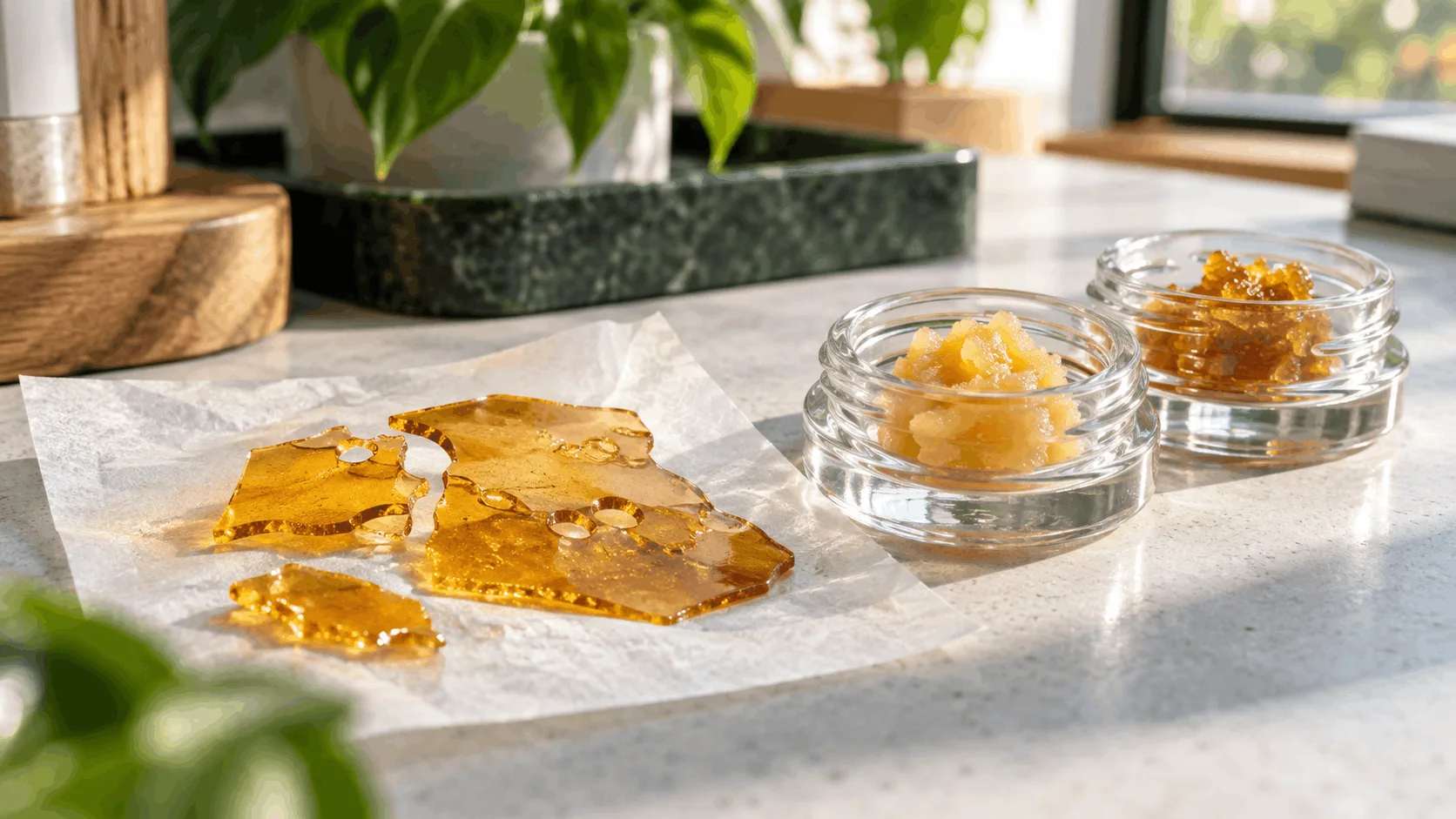
If you've browsed a cannabis concentrate menu, you've probably seen names like wax, badder, live resin, rosin—and shatter weed.
Despite the name, shatter isn't a different kind of cannabis plant. It's a type of cannabis concentrate recognized largely by its firm, glass-like consistency, which can snap or “shatter” when handled.
But texture is only part of the story. Understanding shatter weed means looking at how concentrates are produced, how shatter compares with other extracts, and why potency and terpene content deserve attention before buying.
TL;DR – Quick Guide
Here's what to know about shatter weed:
- Shatter is a type of cannabis concentrate.
- It's usually translucent with a brittle or glass-like texture.
- Shatter is commonly produced using solvent-based extraction and subsequent processing.
- Cannabis concentrates can contain much higher THC concentrations than flower.
- Wax, badder, crumble, and shatter can differ significantly in consistency.
- Live resin emphasizes preservation of compounds from fresh or fresh-frozen cannabis.
- Rosin is produced without hydrocarbon solvents.
- Terpenes contribute significantly to cannabis aroma and flavor.
- Texture alone doesn't determine concentrate quality.
- Buy concentrates from licensed California cannabis retailers and check the product label.
In short: shatter weed is one concentrate format among many, and the best choice depends on potency, flavor, extract type, consistency, and personal preference.
Detailed Breakdown
What Is Shatter Weed?
Shatter weed, usually shortened to simply shatter, is a cannabis extract known for its hard, brittle appearance.
High-quality shatter is often translucent and can range in color from pale gold to darker amber. Its physical consistency is where the name comes from: instead of behaving like a soft wax or creamy badder, it can break apart into pieces.
Shatter belongs to the larger category of cannabis concentrates.
These products concentrate cannabinoids and other compounds from cannabis plant material, resulting in products that can contain substantially more THC than typical cannabis flower.
If you're comparing concentrate formats locally, MedLeaf's guide to concentrates delivery in San Diego provides a broader overview of dabs, wax, and other options.
How Is Shatter Made?
Commercial shatter is commonly produced through solvent-based cannabis extraction followed by additional processing.
Hydrocarbons such as butane can be used in licensed manufacturing environments to extract cannabinoids and other compounds from cannabis material. The extract then undergoes controlled processing to remove residual solvents and create the desired final consistency.
California's regulated cannabis system requires manufactured products to undergo compliance testing before they can be sold at licensed retailers. Testing includes categories such as cannabinoids, residual solvents, pesticides, heavy metals, microbial impurities, and other contaminants.
This is one reason consumers shouldn't attempt to produce solvent-based concentrates at home.
Extraction involving flammable solvents can create serious fire and explosion hazards and belongs in properly equipped, regulated manufacturing facilities.
Why Does Shatter Look Like Glass?
The characteristic appearance of shatter weed comes from its physical structure and processing.
Unlike concentrates intentionally whipped or manipulated into softer textures, shatter is processed to maintain a relatively stable, smooth consistency.
The result can resemble:
- Thin amber glass
- Hard candy
- Brittle resin
- A translucent sheet
Not every shatter product will look identical.
Color and transparency can vary depending on the source material, extraction process, storage, age, and formulation. A lighter color also doesn't automatically mean the product is stronger or better.
Is Shatter Stronger Than Cannabis Flower?
Cannabis concentrates generally contain higher concentrations of cannabinoids than flower.
That means shatter weed can be very potent, particularly for consumers accustomed primarily to traditional cannabis flower.
But potency varies.
Rather than relying on a generic online number, check the regulated product label for:
- THC content
- CBD and other listed cannabinoids
- Product weight
- Batch information
- Required warnings
- Testing information
The highest THC percentage also isn't automatically the best concentrate.
Flavor, aroma, extract quality, terpene profile, freshness, and your own tolerance all matter.
Shatter vs. Wax: What's the Difference?
Shatter and wax are both cannabis concentrates, but their texture and consistency are usually the easiest differences to recognize.
Shatter tends to be:
- Harder
- Brittle
- Glass-like
- Relatively translucent
Wax tends to be:
- Softer
- More opaque
- Wax-like or crumbly
- Easier to manipulate physically
These differences can result from how the extract is processed after extraction.
Neither consistency automatically guarantees better quality.
When comparing products, look beyond whether one resembles glass and another resembles cake frosting. The cannabinoid profile, terpene content, extraction method, testing, and freshness provide much more useful information.
MedLeaf's guide on how to choose cannabis concentrates covers those factors in greater detail.
Shatter vs. Live Resin
Live resin differs from conventional shatter primarily in how the starting cannabis material is handled and how the concentrate is designed.
Live resin is generally produced from cannabis that is frozen shortly after harvest rather than conventionally dried and cured first. This process is intended to preserve more of the plant's volatile compounds, particularly terpenes.
Because of that, live resin is often marketed toward consumers who prioritize strong cannabis aroma and strain-specific flavor.
Shatter, meanwhile, describes a physical concentrate consistency and is commonly associated with extracts produced from dried cannabis material.
So the comparison isn't simply “hard versus soft.”
The starting material and extraction goals can also be different.
Shatter vs. Rosin
The biggest distinction between shatter and rosin is the extraction process.
Shatter is generally associated with solvent-based extraction.
Rosin, by contrast, is produced using pressure and heat without hydrocarbon solvents. That difference has made rosin particularly popular among consumers interested in solventless cannabis concentrates.
Rosin can also come in several forms, including flower rosin and hash rosin.
For a deeper comparison of concentrate production styles, see MedLeaf's guide to live resin vs. rosin.
What Role Do Terpenes Play in Shatter?
THC gets most of the attention, but aroma and flavor are heavily influenced by terpenes.
Terpenes are naturally occurring aromatic compounds found in cannabis and many other plants.
Common examples associated with cannabis include:
- Limonene
- Myrcene
- Pinene
- Caryophyllene
- Linalool
Extraction and processing methods can affect the terpene composition of a concentrate.
That's why two concentrates with similar THC percentages can smell and taste noticeably different.
MedLeaf's guide to cannabis terpenes explains their role in cannabis aroma and flavor in more detail.
Consumers should be cautious, however, about claims that a particular terpene guarantees a specific medical or psychoactive effect. Individual responses to cannabis are more complicated than a single compound.
Does Shatter Quality Depend on Color?
Not by itself.
You'll sometimes hear that pale or nearly transparent shatter is automatically superior to darker concentrates. That's an oversimplification.
Color can be influenced by:
- Starting material
- Plant maturity
- Extraction method
- Processing
- Storage
- Age
Visual appearance can help you notice obvious quality problems, but it shouldn't replace testing information and product labeling.
Think of color as one clue—not the final verdict.
How Should Shatter Be Stored?
Concentrates should be protected from conditions that can degrade their quality.
Excessive exposure to heat, air, and light can affect consistency, aroma, and overall condition.
Follow the manufacturer's storage instructions and keep the product securely sealed when not in use.
Most importantly, cannabis concentrates should always be stored where children and pets cannot access them.
Because concentrates can contain high levels of THC in relatively small amounts, secure storage matters.
How to Choose Between Shatter and Other Concentrates
There's no universally “best” concentrate.
Your choice should depend on what you value.
Consider shatter if: You prefer a firm, brittle concentrate consistency.
Consider live resin if: Cannabis aroma and strain-forward flavor are major priorities.
Consider rosin if: You specifically prefer a solventless extraction method.
Consider wax or badder if: You prefer a softer concentrate texture.
Whatever format you choose, check potency carefully.
Concentrates are not simply stronger-looking versions of flower. They can deliver considerably higher cannabinoid concentrations, making tolerance especially important.
Buying Cannabis Concentrates Through MedLeaf Delivery
Adults shopping through MedLeaf Delivery can check the current menu for available cannabis concentrates.
Specific shatter, wax, resin, rosin, and other products can change with inventory, so live product listings are the most useful source for current availability and cannabinoid information.
When comparing shatter weed with another concentrate, look at the whole product:
Extract type + cannabinoids + terpenes + freshness + testing + personal tolerance.
That's much more useful than choosing based solely on THC percentage—or which concentrate looks coolest through the package.
Key Takeaways
- Shatter weed is a cannabis concentrate known for its hard, brittle, glass-like consistency.
- Shatter is commonly produced using solvent-based extraction in commercial manufacturing.
- Cannabis concentrates can contain substantially more THC than traditional flower.
- Shatter and wax differ mainly in physical consistency and processing.
- Live resin is associated with fresh or fresh-frozen cannabis and terpene preservation.
- Rosin uses heat and pressure rather than hydrocarbon solvents.
- Terpenes contribute to cannabis aroma and flavor.
- Color alone isn't a reliable measurement of concentrate quality.
- California-regulated cannabis products undergo required compliance testing before retail sale.
- Buy concentrates from licensed retailers and store them securely away from children and pets.
Shatter weed may stand out because of its glass-like appearance, but appearance isn't what makes a concentrate right for you. Understanding extraction type, potency, terpenes, testing, and your own tolerance makes for a much smarter comparison.
FAQs
1. What is shatter weed?
Shatter weed is a cannabis concentrate known for having a firm, brittle, and often translucent consistency. It contains concentrated cannabinoids extracted from cannabis plant material and may have substantially higher THC levels than flower. Individual potency and cannabinoid content vary, so consumers should check the specific product label.
2. Is shatter the same as wax?
No, although shatter and wax are both cannabis concentrates and can be produced using similar extraction methods. Shatter generally has a hard, glass-like texture, while wax tends to be softer, opaque, or crumbly. Texture alone doesn't determine which concentrate is higher quality or more potent.
3. Is shatter stronger than regular cannabis flower?
Shatter and other concentrates can contain much higher concentrations of THC than typical cannabis flower. The actual potency depends on the individual product and batch rather than simply the word “shatter.” Check the regulated product label for the specific THC and other cannabinoid content before purchasing.
4. What's the difference between shatter and rosin?
Shatter is generally associated with solvent-based extraction, while rosin is produced mechanically using heat and pressure without hydrocarbon solvents. The two products can also differ in texture, aroma, cannabinoid content, and terpene profile. Neither extraction style automatically guarantees that a product will be better for every consumer.
5. Where can I buy shatter weed in San Diego?
Adults age 21 or older can purchase regulated cannabis concentrates from licensed California retailers where the desired products are available. MedLeaf Delivery may carry shatter and other concentrates depending on its current inventory and eligible delivery areas. Check the live menu for current products, cannabinoid information, package sizes, and pricing before ordering.
More from October 2026
Order weed delivery near you
MedLeaf delivers licensed, lab-tested cannabis across North County San Diego and Southwest Riverside County. Pick your city to see local delivery details, or browse the live menu.
- Weed delivery in Oceanside
- Weed delivery in Carlsbad
- Weed delivery in Encinitas
- Weed delivery in San Marcos
- Weed delivery in Vista
- Weed delivery in Escondido
- Weed delivery in Fallbrook
- Weed delivery in Bonsall
- Weed delivery in Temecula
- Weed delivery in Murrieta
- Weed delivery in Solana Beach
- Weed delivery in Del Mar
- Weed delivery in Poway