
September 2026 - Concentrates / AEO - how to choose cannabis concentrates
How to Choose a Cannabis Concentrate Based on Flavor, Potency and Experience
Learn how to choose cannabis concentrates by comparing flavor, potency, extract type, terpenes and experience level before you buy.
By the MedLeaf Editorial Team ·
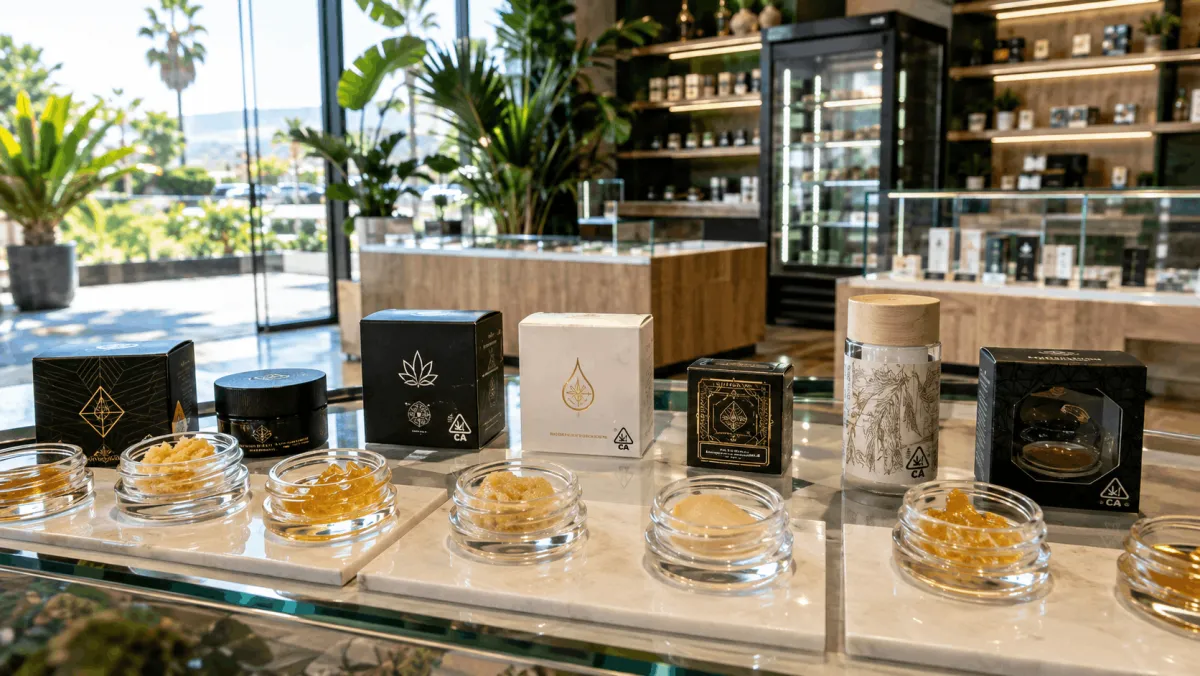
How to Choose Cannabis Concentrates: A Texture-by-Texture Buying Guide
Shatter. Badder. Sugar. Sauce. Crumble. Diamonds. Rosin.
A concentrate menu reads like a dessert case, and that is exactly the problem. Those words are not flavors and they are not strength ratings. Every one of them describes a physical state: how thick the oil is, whether it holds a shape, whether it snaps or smears, whether it can be scooped with a metal tool or has to be dripped.
That physical state is the single most practical thing on the label, because it decides how the product behaves once the jar is open. It determines which dab tool works, whether the material stays put on a warm surface, how much you waste on the paper liner, and how accurately you can portion a dose by eye.
This guide is the entry point for the concentrate category. It covers what a concentrate actually is, then walks each consistency you will see on a menu: what it physically is, how it handles, what equipment it needs, and what it is genuinely good at. If you want the chemistry behind how these products are made, that lives in a separate guide. If you want to know what is loaded inside a vape cartridge, that lives in another. This one is about which jar to buy.
TLDR - Quick Guide
- Consistency is a workability spec, not a quality grade. Badder is not weaker than shatter because it is soft.
- Soft textures - badder, budder, sugar - are the most forgiving to scoop and portion. Start there.
- Shatter is the tidiest to store and the fussiest to handle, because it goes brittle when cold and sticky when warm.
- Sauce is two things in one jar: a liquid terpene layer and solid crystals. It needs a needle or paddle tool, not a flat scoop.
- Diamonds are crystalline THCA and behave like coarse sugar. They melt slowly and reward lower heat.
- Crumble is dry and flaky, which makes it the easiest texture to sprinkle into a joint or bowl without a tool.
- Rosin ranges from a runny fresh press to a firm cold cure. Which one you get changes handling more than the fact it is solventless.
- Match texture to the hardware you already own before you match it to a THC number.
- Anything sticky belongs in the fridge between sessions. Anything brittle belongs at room temperature before you open it.
- Concentrates arrive in half-gram and one-gram jars, so a single purchase is many sessions. Buy for handling, not volume.
What a Cannabis Concentrate Actually Is
Cannabis flower is mostly plant matter. The compounds people are after - cannabinoids like THC and THCA, and the aromatic terpenes that give a cultivar its smell - sit mainly in the resin glands on the surface of the bud. A concentrate is what you get when those glands, or the resin inside them, are separated from everything else.
Strip away the leaf material and you are left with a fraction of the original weight carrying most of the active compounds. That is why tested cannabinoid content on a concentrate label routinely lands in the 60 to 90 percent range, where flower generally sits far lower. The material is not a different drug. It is the same compounds with the filler removed.
Two consequences follow, and they matter more than any menu description.
First, portion size collapses. A serving of concentrate is measured in fractions of a grain of rice, not in bowls. A one-gram jar is not one sitting.
Second, texture becomes the variable you interact with. When the product is a small amount of thick material in a tiny container, every practical question you have - how do I get it out, how much did I just take, where does the rest go - is a question about consistency.
Why Two Jars of the Same Strength Behave Completely Differently
Consistency is an outcome of processing, not of potency. After extraction, the raw material is a mixture of cannabinoids and terpenes that can be pushed toward different physical states.
Heat and agitation whip air into it and produce a soft, opaque, spreadable product. Low heat with a long, undisturbed vacuum purge produces a stable glass. Leaving the mixture alone while cannabinoids fall out of solution produces crystals sitting in a terpene liquid. Drying it aggressively produces a dry, flaky solid.
All of those can start from the same batch of extract. The number on the label may barely move. What changes is everything about how the product handles.
So when a budtender or a menu filter offers you badder or shatter, the honest translation is not stronger or weaker. It is softer or harder.
The Consistency Map: Every Texture on the Menu
Shatter
What it is: a translucent, amber, glass-like slab. It is produced by purging the extract gently and leaving it undisturbed, so the cannabinoids stay suspended rather than crystallizing out.
How it handles: cold shatter snaps cleanly, which is the easy case. Warm shatter turns into taffy that stretches, sticks to the tool, and pulls the whole slab out of the container in one piece. The window between the two is narrow, and a warm car or a hot room is enough to cross it.
What it needs: a flat-blade or paddle dab tool to break off a piece, and a cool surface to work on. Shatter stores flat in parchment or a silicone slab container rather than a scoop jar.
Good at: clean storage, no residue, easy visual inspection. Poor at: forgiving handling.
Badder and Budder
What it is: extract that has been whipped during the purge, folding air through it until it turns opaque and creamy. Badder is usually the looser, more spreadable version; budder is firmer, closer to cold butter. Producers use the terms inconsistently, so treat them as one family and judge from the jar photo.
How it handles: this is the most forgiving texture in the category. It scoops in a clean ball, releases from the tool with a small amount of heat, and does not shatter into fragments you then have to chase around the container.
What it needs: a scoop or spoon-end dab tool. A standard glass or silicone-lined jar. Nothing specialized.
Good at: portioning by eye, since a consistent scoop is repeatable. This is the texture to buy first if you are new to jarred concentrate.
Wax
What it is: the loosest term on any menu. Wax is a catch-all for opaque, soft, non-glassy extract, and different producers apply it to material that another brand would sell as budder or crumble.
How it handles: depends entirely on which end of the range you got. Softer wax behaves like budder. Drier wax behaves like crumble.
What it needs: check the product photo before you order, not the word. If the picture shows a smooth mound, expect scoopable. If it shows a broken, granular pile, expect flaky.
Good at: nothing in particular, because it is a category rather than a specification. Treat wax as a prompt to look closer.
Crumble
What it is: extract purged at lower heat over a longer period, which drives off more residual moisture and leaves a dry, honeycombed solid that breaks apart under light pressure.
How it handles: dry and non-sticky, which is its defining advantage. It crumbles between fingers without coating them, and it does not weld itself to the jar.
What it needs: often no tool at all. Crumble is the one texture that sprinkles cleanly into a bowl or along a joint without gumming up the paper.
Good at: adding to flower. Poor at: staying contained. Fine crumbs travel, and what falls outside the jar is gone.
Sugar
What it is: a wet, granular texture where small cannabinoid crystals have formed inside a thicker terpene-rich base. Visually it looks like damp brown sugar.
How it handles: it scoops, but it does not hold together the way badder does. Grains separate from the mass, so a scoop delivers a slightly variable amount.
What it needs: a scoop tool with a lip. A flat blade will lose half the load on the way to the nail.
Good at: a middle ground between soft extract and crystalline product, with the terpene content sitting right there in the wet portion.
Sauce
What it is: a deliberately separated product. The cannabinoids have crystallized out and settled, leaving a distinct liquid layer of terpene-rich extract above or around them. Menus sometimes list it as high-terpene extract.
How it handles: this is the messiest thing you can buy, and the most flavorful reason to accept mess. The liquid runs. Tip the jar and it migrates. Getting a representative portion means picking up both the liquid and some solids in the same pass.
What it needs: a needle-tip or narrow paddle tool, and a jar you keep level and upright. Do not buy sauce if it is going to live loose in a bag.
Good at: aroma and flavor intensity, because the volatile fraction is concentrated in the liquid rather than dispersed. Poor at: portability and portion control.
Diamonds
What it is: crystallized THCA, grown over time from a saturated extract solution. Sold either as bare stones or, more commonly, as diamonds and sauce - crystals sitting in the terpene liquid they grew out of.
How it handles: like coarse rock sugar. Bare diamonds are dry and easy to pick up, but they do not deform, so a large stone is a large dose that cannot be split by squishing. Break stones down before you use them.
What it needs: a scoop tool for the stones and a needle for the sauce if the product includes it. Diamonds also reward a slower, lower-temperature approach, because a large solid piece takes time to fully liquefy and chasing it with more heat wastes the terpenes around it.
Good at: looking impressive, and delivering a very high cannabinoid fraction. Note that THCA converts to THC when heated, which is why a label can list a high THCA figure that only becomes active on use.
Rosin
What it is: a solventless product pressed with heat and pressure. Its texture depends on how it was treated after the press, and the range is wide.
How it handles: a fresh press is loose, wet, and prone to running. A cold-cured rosin is thick and buttery, close to badder in handling. A jam or batter sits in between. Some rosin is whipped, which pushes it toward budder.
What it needs: refrigeration is more of a real requirement here than elsewhere. Rosin left warm will keep changing texture in the jar, separating and darkening faster than a purged hydrocarbon extract will.
Good at: flavor. Poor at: shelf stability. Buy rosin to use, not to store for months. The reason it costs more than most of the jars beside it is a production question, covered in the extraction guide below.
Match the Texture to the Hardware You Own
Buying a concentrate before checking your equipment is the most common expensive mistake in this category. Work in this order.
Dab tools are not interchangeable. A flat blade breaks shatter and lifts crumble. A scoop or spoon handles badder, budder, sugar, and diamonds. A needle or narrow paddle is the only thing that manages sauce and loose rosin without a mess. If you own one tool, own a scoop - it covers the widest range.
Heated surfaces matter more for some textures than others. A traditional rig with a torch and a quartz banger works for everything but demands you learn the timing. An electronic device with a set temperature is far more repeatable, which is a real advantage for terpene-heavy products like sauce and rosin where overheating destroys the reason you bought them. Traditional equipment gets extremely hot; follow the manufacturer instructions and let it cool before handling.
Portable concentrate vaporizers usually take a small loaded chamber, which suits firm textures. Very runny products can leak past the chamber and foul the device.
Cartridges are a separate world. You cannot load a jar of badder into a standard vape cartridge - cartridge fills are formulated to flow through a wick and coil. That comparison is covered in the cartridge guide linked below.
Factor equipment into the purchase price. A thirty dollar jar that needs a hundred dollars of hardware you do not own is not a thirty dollar decision.
Handling, Portioning, and Waste
The practical differences between textures show up in three places.
Portioning. Soft, cohesive textures let you take a repeatable amount because the material holds a shape on the tool. Granular and crystalline textures do not, so portions vary more between sessions. If consistent dosing matters to you, that argues for badder or budder over sugar or bare diamonds.
Waste. Every gram loses some material to the tool, the jar walls, and the liner. Sticky textures lose the most to the container; dry textures lose the most to the surroundings. Neither is free. Working over the open jar rather than beside it recovers a surprising amount.
Temperature during handling. Everything soft gets softer with body heat and hand contact. Everything brittle gets tacky in the same conditions. Take out what you need and close the jar, rather than leaving it open on a warm table while you set up.
Storage, by Texture
Follow the manufacturer instructions on the package first. As a general pattern, the wetter and more terpene-rich the product, the more it benefits from cold, dark, airtight storage, because those aromatic compounds are volatile and leave over time.
Rosin and sauce are the most sensitive and the best candidates for the refrigerator between sessions. Badder and budder are stable at cool room temperature but hold their character longer if kept cold. Shatter should be kept cool and flat so it does not slump, and allowed to reach room temperature before you try to break it. Crumble mostly needs an airtight seal, since its enemy is drying out further rather than melting.
Heat, light, and air all degrade the part of the product you paid extra for. Leaving a terpene-rich jar on a sunny windowsill is an efficient way to buy something expensive and then discard the reason it was expensive.
Which Jar Should You Buy?
Translate your actual situation into a texture.
You want the most forgiving first purchase: badder or budder. It scoops, it does not run, it does not shatter, and it works with the cheapest tool.
You want to add concentrate to flower rather than dab it: crumble. It is dry enough to sprinkle and will not ruin a rolling paper.
You care mainly about aroma and flavor: sauce or rosin, and accept that both are messier and less stable in exchange.
You want the cleanest storage and do not mind fussy handling: shatter.
You want the highest cannabinoid fraction in the jar: diamonds, with the caveat that a solid stone is harder to portion than a soft scoop.
You do not want to own a rig at all: skip jars entirely and look at cartridges instead.
What Texture Does Not Tell You
Consistency answers handling questions. It does not answer these, so do not read them into it.
It does not tell you how the product was made. A badder can be a hydrocarbon extract or a whipped rosin. If the solvent-versus-solventless question matters to you, read our guide to live resin vs rosin, which covers extraction methods, what fresh-frozen input changes, and residual solvent testing.
It does not tell you what goes into a vape cartridge. Cartridge fills are a different formulation problem, covered in live resin carts vs distillate carts.
It does not tell you the flavor. That comes from the cultivar and its terpene profile, explained in Cannabis Terpenes Explained.
It does not tell you whether the batch passed testing. Every legal cannabis product in California carries batch and lab information on the package; how to read that is covered in our guide to reading a menu listing and lab results. The California Department of Cannabis Control requires compliance testing before retail sale, which is the practical argument for buying through a licensed retailer.
Once you know which texture you want, you can browse the current selection at the MedLeaf menu. Concentrate stock rotates, so check what is actually listed before settling on a specific jar.
Key Takeaways
- Concentrate names like badder, shatter, sugar, sauce, crumble, and diamonds describe physical consistency, not strength.
- The same extract batch can be processed into several different textures with little change to its tested cannabinoid content.
- Badder and budder are the most forgiving textures to scoop and portion, which makes them the practical first purchase.
- Crumble is the only texture that reliably sprinkles into flower without a tool.
- Sauce and fresh-pressed rosin are the messiest and the most aroma-forward, and both need a needle-style tool and level storage.
- Diamonds are crystalline THCA that will not deform, so portion by breaking pieces rather than squishing them.
- Shatter is brittle when cold and sticky when warm, with a narrow comfortable window between.
- Buy a scoop-end dab tool if you only buy one, and check your hardware before you check the THC number.
- Terpene-rich textures degrade fastest in heat, light, and air, so keep them cold, dark, and sealed.
- Texture tells you nothing about extraction method, cartridge contents, flavor, or lab results - those are separate questions with separate guides.
FAQs
1. Which concentrate texture is best for a first purchase?
Badder or budder. Both are soft, cohesive, and opaque, so they scoop in a clean ball with an inexpensive spoon-end tool and release without fighting you. They do not run like sauce, do not shatter into fragments, and do not scatter like crumble. That makes portioning far more repeatable while you are still learning what a comfortable amount looks like.
2. Is shatter stronger than badder?
No. The difference is how each was purged and whether it was agitated afterward, not how much cannabinoid content it holds. Two jars from the same extraction run can be finished as shatter and as badder with very similar tested numbers. Compare the cannabinoid figures printed on each package rather than assuming the harder product is the stronger one.
3. What is the difference between sauce and diamonds?
They are usually two parts of the same product. Diamonds are crystallized THCA that has fallen out of solution, and sauce is the terpene-rich liquid left behind. Sold together as diamonds and sauce, you get both. Sold separately, bare diamonds are the cannabinoid fraction with far less aroma, and sauce on its own is the aromatic fraction.
4. Do I need a dab rig to use concentrates?
Not always. Crumble and other dry textures can be added to flower without any dedicated equipment. Portable concentrate vaporizers accept small loaded amounts of firmer textures. But sauce, runny rosin, and most soft extracts realistically need a heated surface and a proper tool. If you do not want to own that hardware, a vape cartridge is the format designed for you.
5. How should I store a concentrate between sessions?
Sealed, cool, dark, and level. Follow whatever the manufacturer prints on the package first. Terpene-heavy products such as rosin and sauce benefit most from refrigeration, and sauce in particular should stay upright so the liquid fraction does not migrate. Shatter should be kept flat and cool and warmed to room temperature before you handle it, or it will slump instead of snapping.
More from September 2026
Order weed delivery near you
MedLeaf delivers licensed, lab-tested cannabis across North County San Diego and Southwest Riverside County. Pick your city to see local delivery details, or browse the live menu.
- Weed delivery in Oceanside
- Weed delivery in Carlsbad
- Weed delivery in Encinitas
- Weed delivery in San Marcos
- Weed delivery in Vista
- Weed delivery in Escondido
- Weed delivery in Fallbrook
- Weed delivery in Bonsall
- Weed delivery in Temecula
- Weed delivery in Murrieta
- Weed delivery in Solana Beach
- Weed delivery in Del Mar
- Weed delivery in Poway