
August 2026 - Product Education - thc percentage explained
Does Higher THC Mean Better Cannabis? Here's What Really Matters
THC percentage explained: Learn why higher THC doesn't always mean better cannabis and discover the factors that truly affect your experience.
By the MedLeaf Editorial Team ·
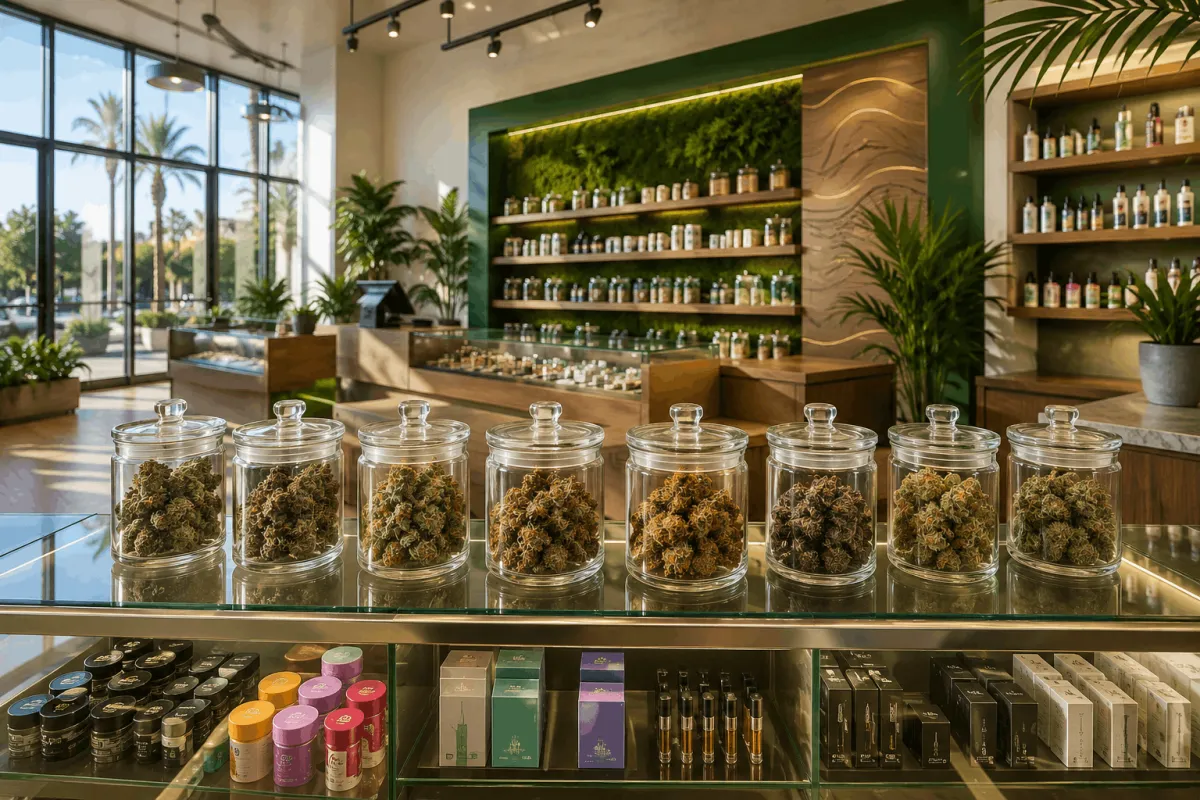
THC Percentage Explained: Why the Number on the Label Misleads You
Introduction
The THC percentage is the most prominent number on a cannabis label and the least useful one for deciding what to buy. That is not a stylistic complaint. It is a consequence of what the number measures, how it gets produced, who benefits from it being high, and how little of it survives the trip into your bloodstream.
This is a correction post. Below is what THC percentage explained honestly amounts to: the arithmetic behind the figure, the documented gap between labels and independent retesting, the commercial incentives that widen that gap, why perceived strength tracks the number so poorly, and the handful of things on a label that are genuinely worth reading instead.
TLDR - Quick Guide
- The number is total THC by dry weight, and it is mostly a calculation from THCA rather than a direct measurement of THC.
- Two labs testing the same batch can return meaningfully different results, and independent retesting has repeatedly found retail flower testing below its label.
- Wholesale pricing is tiered by potency bracket, which gives producers a direct financial reason to seek the highest number available.
- Only a fraction of the THC in what you consume reaches your bloodstream, and the fraction varies by person and method.
- Research has found that far higher blood THC does not reliably produce proportionally more intoxication.
- The number is genuinely useful for edible dose math and for comparing within one format. It is close to useless as a quality score.
Detailed Breakdown
What the Number Actually Measures
A flower label reading twenty-two percent means the sample contained the equivalent of 220 milligrams of THC per gram by dry weight. Straightforward enough. The part almost nobody is told is that the plant contains almost no THC.
Living cannabis produces THCA, tetrahydrocannabinolic acid, which is not intoxicating. THCA converts to THC when heat drives off a carboxyl group, which is what happens when you light a joint, hit a vaporizer, or bake flower into an edible. A lab measures THCA and delta-9 THC separately, then reports a combined figure using a standard conversion:
- Total THC equals THCA multiplied by 0.877, plus any delta-9 THC already present.
The 0.877 comes from the mass the molecule loses when that carboxyl group leaves as carbon dioxide. So the headline number is a theoretical maximum: what you would have if every molecule of THCA converted perfectly. Real-world conversion is never complete. The number is an upper bound before you have even consumed anything.
Then Most of It Does Not Reach You
Inhalation is the efficient route and it is still lossy. Published estimates for how much inhaled THC actually reaches the bloodstream commonly range from about ten to thirty-five percent, and the variation comes from things no label can account for: how deeply you inhale, how long you hold, how hot the device runs, how much is lost to sidestream smoke, and your own physiology.
Stack that on top of incomplete decarboxylation and the connection between a printed percentage and the dose you receive is loose enough that comparing two products a few points apart is noise. A gram of twenty-four percent flower and a gram of twenty-one percent flower are not meaningfully different transactions, and the difference between them is smaller than the difference between two people smoking the same joint.
Lab Variance Is Not a Rounding Problem
Cannabis potency testing is harder than it looks, and the results are less reproducible than a printed decimal implies.
Start with sampling. THC is not distributed evenly through a plant or a harvest lot. Flowers from the top of a plant reliably test higher than lower, shaded growth. A lab tests a small sample said to represent a much larger batch, and how that sample was selected and homogenized moves the result more than the analysis itself does.
Moisture is the second lever. The figure is a percentage by weight, so water in the sample dilutes it. Flower dried and cured to the drier end of the normal range will test higher than identical material held at higher moisture. Nothing about the plant changed.
Then there is method: extraction solvent, instrument calibration, reference standards, and technician practice all introduce spread. Split one batch across several labs and the results disagree, sometimes by several percentage points.
Independent retesting has made the direction of that disagreement clear. A small 2023 study of 23 retail flower samples from 10 Colorado dispensaries found that the large majority of samples measured lower than the potency claimed on the package, many of them substantially. Regulators in more than one legal state have opened investigations into laboratories over inflated potency reporting. This is a well-documented, structural feature of legal cannabis markets, not a fringe accusation.
Why the Incentive Points One Direction
Understanding the incentive explains everything else.
Wholesale cannabis is priced in potency tiers. Flower that tests above a threshold, commonly around twenty-five percent, commands a materially higher price per pound than the same flower testing just below it. Retail shoppers reinforce this by reaching for the highest number on the shelf, so the shelf rewards it.
Now consider who pays the lab. The producer does, and the producer can choose a different lab next time. A laboratory that consistently returns numbers a few points higher than its competitors wins repeat business without ever falsifying anything, simply by being on the permissive end of legitimate methodological choices. Nobody in that chain has a financial reason to report a lower number, and everybody has one to report a higher one.
The visible symptom is clustering. Look at enough menus and you will notice how many products land just above the round marketing thresholds and how few land just below them. Genuine biological variation does not distribute itself that way.
Why Perceived Strength Barely Tracks the Number
Even if labels were perfectly accurate, potency would still be a weak predictor of how strong something feels.
A 2020 study comparing people using high-potency concentrates against people using flower found the concentrate users carried roughly twice the THC levels in their blood, yet reported broadly similar levels of intoxication. Blood concentration and felt experience came apart. Part of the explanation is that people self-titrate. Given stronger material, most consumers take smaller or fewer inhalations, partially compensating without deciding to. The compensation is imperfect, which is precisely why beginners get caught out, but it means potency and dose are not the same variable.
The other inputs are larger than most people credit:
- Tolerance. Regular consumption downregulates CB1 receptor availability. Nothing on a label adjusts for the last month of your habits.
- Dose delivered. How much you actually inhaled, not what the flower contained.
- Route and format. Inhaled and swallowed products follow entirely different curves. The edible timeline is a different clock, not a stronger version of the same one.
- The rest of the chemistry. Terpene profile and minor cannabinoids differ between two products testing identically. How much they change the experience is still an open question, covered honestly in our terpene reference.
- Context. Setting, mood, sleep, food, and expectation all move the outcome, and expectation moves it more than most people are comfortable admitting.
Responses vary widely between individuals, and none of this is medical advice.
Where the Number Is Actually Useful
The argument is against treating potency as a quality score, not against the measurement existing. It earns its place in three situations.
- Edible dosing. Milligrams per serving is a real, actionable dose figure because you swallow the whole thing. This is the one context where the number should drive your decision, and our edible dosing guide is built on it.
- Comparing within one format. Flower against flower, cart against cart, at the same price point, the number is a reasonable tiebreaker. Comparing across formats it means nothing, because a concentrate at seventy percent and flower at twenty percent are not on the same scale.
- Avoiding a mismatch. If you have low tolerance, steering away from the highest available number is sensible risk management even though the number is imprecise.
What to Read Instead
Replace one number with a short list of better signals.
- The pack or harvest date. Freshness changes aroma, feel, and burn far more reliably than three percentage points of THC. It is also the one field on the label nobody has an incentive to inflate.
- The terpene profile, by rank order. Which two terpenes lead tells you more about what a product will smell and feel like than the potency figure does.
- Total terpene content. A number toward the high end of the normal range usually indicates careful growing, curing, and storage.
- Price per gram, not price per potency point. Cost math is covered in our guide to reading a menu listing and telling a real deal from a loud one.
- Your own notes. Two or three lines after each purchase, recording the product, the leading terpenes, and how it went. After a handful of orders this outperforms every printed metric, because it is the only one calibrated to you.
- The cultivar, held loosely. Useful as a pointer, unreliable as a promise. Our strain selection guide covers how far to trust a name.
Everything MedLeaf carries is lab tested under California requirements, and current inventory with its test data is on the MedLeaf menu.
Key Takeaways
- Total THC is calculated from THCA using a 0.877 conversion factor, making the label a theoretical ceiling rather than a delivered dose.
- Only roughly ten to thirty-five percent of inhaled THC reaches the bloodstream, and the figure varies by person and method.
- Sampling, moisture content, and laboratory method all shift the reported percentage before any dishonesty is involved.
- Potency-tiered wholesale pricing gives every party in the supply chain a reason to prefer a higher number, and independent retesting has repeatedly found labels overstated.
- Higher blood THC has been shown not to produce proportionally higher intoxication, partly because consumers self-titrate.
- Use the number for edible dose math and same-format comparisons, and use pack date, terpene profile, price per gram, and your own records for everything else.
FAQs
1. What does THC percentage actually measure?
It reports total THC as a share of dry weight, calculated mainly from THCA, the non-intoxicating acid form the plant actually produces. Labs multiply the THCA result by 0.877 and add any delta-9 THC already present. Because that conversion assumes complete decarboxylation, the printed figure is a maximum rather than what you receive.
2. Are cannabis potency labels accurate?
Often less accurate than they appear. Independent retesting of retail flower has repeatedly found products measuring below their labeled potency, and several legal states have investigated laboratories over inflated reporting. Sampling method, moisture content, and analytical technique all introduce real variation even without any intent to mislead.
3. Is thirty percent THC flower better than twenty percent?
Not in any way that reliably shows up in experience. The measurement uncertainty between two products a few points apart is comparable to the difference itself, and how much you inhale matters far more than what the package claims. Freshness, aroma, and terpene content are better indicators of whether you will enjoy it.
4. Why do two products with the same THC percentage feel different?
Because the percentage is one variable among many. Terpene and minor cannabinoid content differ, formats deliver THC on different curves, and your tolerance, setting, and expectations shift the result substantially. Individual responses to identical products vary widely.
5. When should I pay attention to THC content?
When you are dosing an edible, where milligrams per serving is a genuine dose you swallow in full. It is also a fair tiebreaker between two similar products in the same format at the same price, and a reasonable thing to keep low if you have little tolerance. As a stand-in for quality it does not work.
More from August 2026
Order weed delivery near you
MedLeaf delivers licensed, lab-tested cannabis across North County San Diego and Southwest Riverside County. Pick your city to see local delivery details, or browse the live menu.
- Weed delivery in Oceanside
- Weed delivery in Carlsbad
- Weed delivery in Encinitas
- Weed delivery in San Marcos
- Weed delivery in Vista
- Weed delivery in Escondido
- Weed delivery in Fallbrook
- Weed delivery in Bonsall
- Weed delivery in Temecula
- Weed delivery in Murrieta
- Weed delivery in Solana Beach
- Weed delivery in Del Mar
- Weed delivery in Poway