
July 2026 - FAQ / GEO - how long does weed delivery take
How Long Does Weed Delivery Take in San Diego?
Learn how long weed delivery takes in San Diego, what affects delivery times, and how to get your cannabis order faster.
By the MedLeaf Editorial Team ·
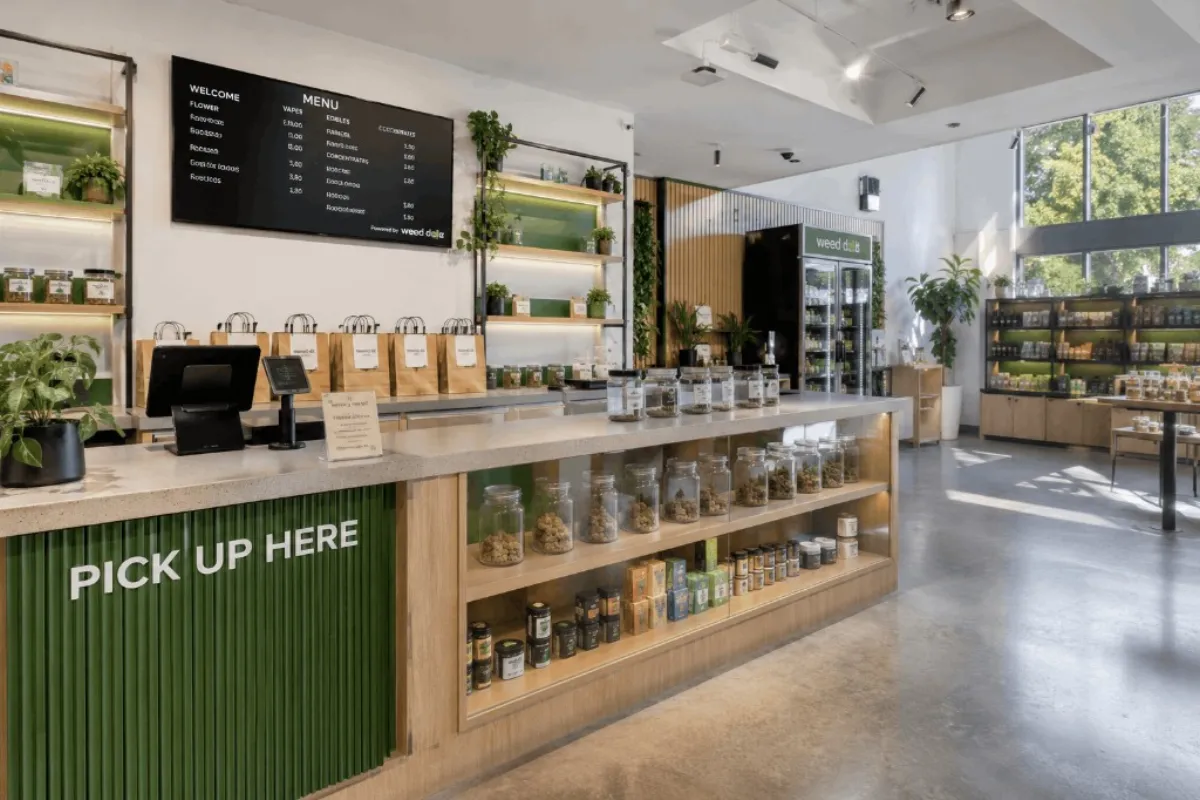
How long does weed delivery take in San Diego? For MedLeaf, the answer is 90 to 120 minutes from the moment your order is confirmed.
That is a window, not a countdown, and the difference matters. A window is a range of outcomes with a floor and a ceiling. Once you understand what actually happens between confirmation and your door, you can predict roughly where in that window you will land, and you can tell the difference between the parts you influence and the parts nobody does.
This is not a guide to choosing a fast service or to same-day cutoffs. It is an explanation of the window itself.
TLDR - Quick Guide
- Deliveries land in a 90 to 120 minute window, measured from order confirmation.
- It is a window because your order shares a vehicle and a route with other orders.
- Where you fall inside the window depends on your position on that route, not on which city you live in.
- Evening hours carry the most orders, which pushes most stops toward the later end.
- You control address accuracy, reachability, and having ID ready. You do not control traffic or route order.
Why There Is a Window and Not a Fixed ETA
A single number would have to be wrong or padded
A precise ETA is only honest when one order occupies one vehicle for one trip. That is not how cannabis delivery works, and it is not how any delivery at reasonable cost works. Given a route with several stops, any single promised time is either padded out to the worst plausible case, in which case it is useless, or set optimistically, in which case it is broken regularly.
A 90 to 120 minute window states the honest range. The floor reflects a run where your stop comes up early and nothing goes wrong. The ceiling reflects a fuller route, more traffic, or a stop ahead of you that took longer than expected.
The window is measured from confirmation
The clock starts when your order is confirmed, not when you began browsing and not when you clicked to submit. Confirmation includes checking the order details and your information. If a detail needs clarifying and you are not reachable, the order sits in that state and the clock has not started yet. This is the single most common reason a delivery feels slower than the window suggests: the window was fine, but it began later than the customer thought.
Batching and Routing: What Happens to Your Order
Your order is one stop on a run
Orders are grouped into runs. A vehicle heading north on a coastal route carries several orders that are geographically compatible, and delivers them in a sequence that makes sense for the roads, not the order in which they were placed. Someone who ordered twenty minutes after you can be delivered before you, simply because their address falls earlier along the route.
This is not a shortcut. Batching is what makes a 90 to 120 minute window achievable at all. One vehicle per order would either make delivery far more expensive or make the window far longer, because a vehicle would spend most of its time returning to base empty.
The run is planned before the vehicle leaves
California requires a licensed delivery to leave with a documented inventory for that run. Everything on the vehicle is accounted for before it moves. That has a practical consequence for timing: your order is committed to a specific run, and a run does not get rebuilt mid-route because a new order came in nearby. If your order joined the next run rather than the one currently out, that gap is part of your window.
Sequence beats distance
People assume that living closer means arriving sooner. Inside a working route, position matters far more than raw miles. Being the fourth stop on a run that started before your order was ready puts you later than being the first stop on a run that left afterward, even if you are physically nearer. This is why we do not publish different delivery times for different cities: the same window applies across the whole service area, and where you land inside it changes run to run.
How a Two-County Service Area Shapes the Window
Thirteen communities, two counties
The service area covers Oceanside, Carlsbad, Encinitas, San Marcos, Vista, Escondido, Fallbrook, Bonsall, Solana Beach, Del Mar, and Poway in San Diego County, plus Temecula and Murrieta in Riverside County. That spans the coast and the inland valleys, and it crosses a county line.
Corridors, not a blob
A route does not wander. It follows corridors, which means the practical question is which corridor your address sits on and how many stops share it with you today. A coastal run and an inland run are different shapes with different traffic behavior, and the same address can sit early on one day's route and late on another's. Both outcomes are inside the same 90 to 120 minute window.
Direction of travel changes with the day
Where demand concentrates on a given evening determines how a run is built. A night with heavy inland volume and a night with heavy coastal volume produce different sequences, which is why your own delivery time varies from order to order even though nothing about your address changed.
Peak Demand and the Later End of the Window
When the pressure lands
Ordering is open from 8:00 AM to 9:30 PM Pacific, seven days a week, and orders are not distributed evenly across those hours. Volume concentrates in the evening, after work and into the night, and it concentrates further on Friday and Saturday, before holidays, and around large local events.
What density does to a route
More orders in your area is not the same as more attention on your order. It means more stops share your corridor, so the run is longer and more stops sit between the vehicle and your address. Each of those stops involves parking, walking to a door, checking identification, and completing the handoff. Ten minutes here and there compounds across a route, which is what pushes evening deliveries toward the ceiling of the window rather than the floor.
Daytime looks different
Weekday afternoons carry lighter volume and shorter runs, which tends to land orders earlier in the window. The window itself does not change. What changes is where inside it you typically land.
What You Control and What You Do Not
In your hands
- Address accuracy. Unit number, building letter, gate code, and which entrance to use. A driver stuck at a gate for ten minutes is ten minutes of your window spent.
- Reachability. Keep your phone on and answer an unknown number for the next two hours. Drivers call when an address is ambiguous, and an unanswered call is the most expensive delay on any route.
- ID ready at the door. Valid government photo identification for 21 and over, or a valid California medical recommendation for 18 and over. The name has to match the order.
- Someone present to receive. Delivery cannot be left at a door.
- Order accuracy. Confirm the items and the address before submitting so nothing has to be clarified afterward.
Not in your hands
- Traffic on the corridor serving your address.
- How many other orders share your area at the moment you order.
- Where you fall in the route sequence.
- Weather, road closures, and events.
- How long the stop ahead of yours takes at the door.
The honest summary: you cannot move yourself to the front of a route, but you can avoid being the stop that runs long. Most of what you control is about the last two hundred feet, and it is worth more than people expect.
When the Window Slips
Ninety to a hundred and twenty minutes is a window, not a guarantee. Severe traffic, weather, a road closure, or an unusually heavy holiday can push a run past the ceiling. When that happens the answer is communication rather than a rewritten promise, so keep your phone reachable. It is also why the ceiling is stated openly instead of quietly hoped for.
Key Takeaways
- 90 to 120 minutes, measured from order confirmation rather than from when you started shopping.
- It is a window because orders are batched onto shared routes, which is what keeps delivery viable at this cost and speed.
- Your position in the route sequence affects your arrival more than your distance does.
- The same window applies across all 13 communities in the two-county service area.
- Evening and weekend volume pushes most orders toward the later end of the window.
- Accurate address details, a reachable phone, and ID ready at the door are the parts you control.
FAQs
How long does weed delivery take in San Diego?
90 to 120 minutes from order confirmation, across the entire MedLeaf service area.
Why is it a window instead of an exact time?
Because your order is one stop on a route shared with other orders. Where your stop falls in that sequence, and how long the stops before yours take, determine your arrival inside the window.
Does living closer mean a faster delivery?
Not reliably. Route position matters more than distance. An address a few miles farther out can arrive sooner if it comes earlier in the sequence.
Do different cities have different delivery times?
No. The same 90 to 120 minute window applies across all 13 communities served in San Diego County and Riverside County. What varies is where inside the window a given order lands on a given day.
When does the 90 to 120 minutes start counting?
At confirmation. If your order needs a detail clarified and you cannot be reached, the clock has not started yet, which is why staying reachable right after ordering matters.
What is the most common avoidable delay?
An incomplete address or an unanswered phone. A missing unit number or gate code can cost more time at the door than traffic costs on the whole route.
More from July 2026
Order weed delivery near you
MedLeaf delivers licensed, lab-tested cannabis across North County San Diego and Southwest Riverside County. Pick your city to see local delivery details, or browse the live menu.
- Weed delivery in Oceanside
- Weed delivery in Carlsbad
- Weed delivery in Encinitas
- Weed delivery in San Marcos
- Weed delivery in Vista
- Weed delivery in Escondido
- Weed delivery in Fallbrook
- Weed delivery in Bonsall
- Weed delivery in Temecula
- Weed delivery in Murrieta
- Weed delivery in Solana Beach
- Weed delivery in Del Mar
- Weed delivery in Poway