
September 2026 - Product Comparison / AEO - flower vs vape
Cannabis Flower vs Vapes: Which Experience Is Right for You?
Compare flower vs vape cannabis for potency, flavor, convenience, cost, hardware and experience to decide which format better fits you.
By the MedLeaf Editorial Team ·
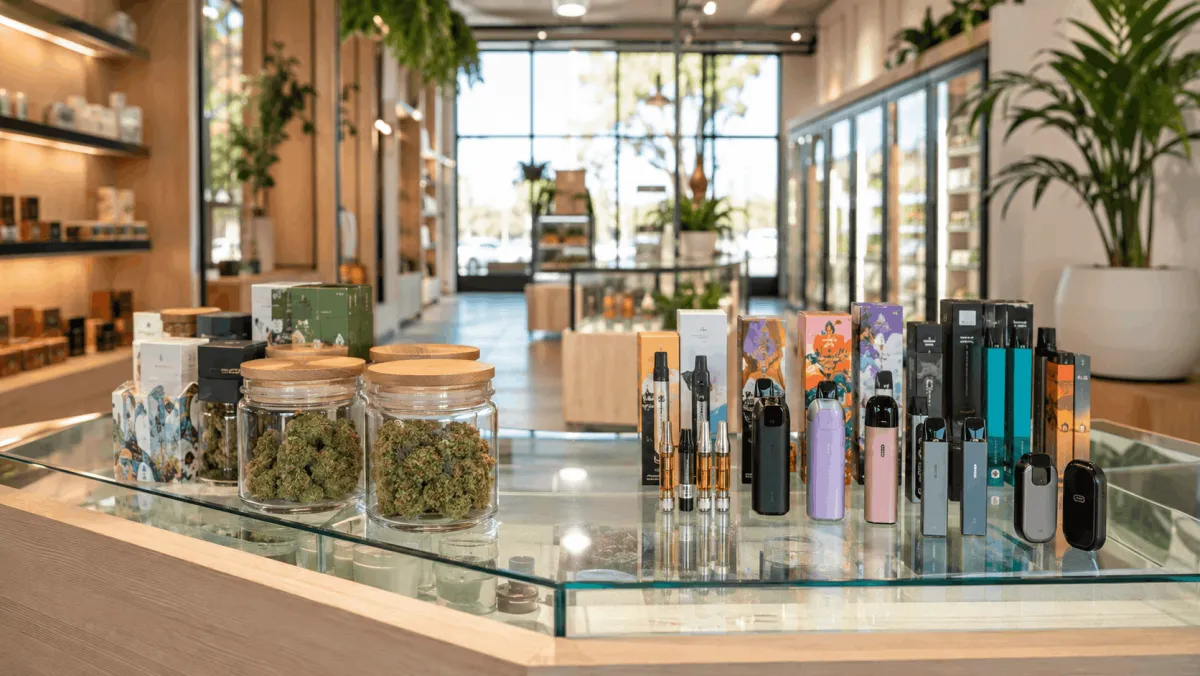
Flower vs Vape: Which Experience Is Right for You?
Flower and vapes are both inhaled, both work in minutes, and both can carry the same strain name on the label. On paper they look like two routes to the same place.
In practice they differ on seven things that actually shape a session: how fast it arrives, how finely you can control the dose, how much it announces itself to the room, what equipment you have to own and maintain, how much of the plant's flavor survives, what a session costs, and how much ritual is involved. Get those seven straight and the choice makes itself.
This is a genuine comparison, not a case for one side. Neither format wins outright, and plenty of people keep both for different situations.
TL;DR - Quick Guide
- Speed: effectively a tie. Both are inhaled and both land within minutes.
- Dose control: vapes are more measurable per puff, flower is more forgiving per increment.
- Discretion: vapes win clearly. Flower smoke lingers on clothing, furniture, and in a room for hours.
- Equipment: flower needs consumables you can run out of; vapes need a battery you can forget to charge.
- Flavor: combustion destroys most terpenes, so a dry herb vaporizer or a live resin cart both beat a lit joint on taste.
- Cost per session: flower is usually cheaper per gram, carts usually deliver more sessions per gram. Compare per session, not per gram.
- Ritual: flower has one, vapes deliberately do not. For some people that is the whole decision.
- Browse both formats on the MedLeaf menu.
Detailed Breakdown
1. What You Are Actually Buying
Flower is the dried, cured bud of the cannabis plant. You grind it and burn it in a joint, pipe, or bong, or you heat it without burning it in a dry herb vaporizer. THC content commonly lands somewhere between 15% and 30%, and you are buying the whole plant material - cannabinoids, terpenes, plant matter and all.
A vape is a concentrated cannabis extract packaged with, or designed for, hardware. The oil is typically 70% to 90% THC depending on whether it is distillate, live resin, or rosin. You are not buying plant material; you are buying an extract someone else has already made a set of decisions about.
That difference - whole plant versus finished extract - is upstream of every comparison below.
2. Flower vs Vape at a Glance
Seven dimensions, side by side.
Onset speed
- Flower: effects within minutes of the first inhale; peak in roughly 10 to 30 minutes.
- Vape: the same. Both go lungs to bloodstream, so neither has a real speed advantage.
Dose control
- Flower: unmeasured but granular. You cannot say how many milligrams a puff was, but each one is a small increment.
- Vape: measured but concentrated. The oil percentage is printed, but each puff carries more, so overshooting is easier.
Discretion
- Flower: strong smell during and after, and it clings to clothing, hair, and soft furnishings.
- Vape: a faint aerosol that dissipates in minutes and leaves little behind. Pocketable and quiet.
Equipment
- Flower: grinder, papers or a pipe, a lighter. Cheap individually, and all of it runs out.
- Vape: a compatible battery for carts, a system-specific battery for pods, or nothing at all for an all-in-one. Needs charging.
Flavor and terpenes
- Flower: best-in-class in a dry herb vaporizer, mediocre when combusted, because a flame destroys most of what makes it taste like anything.
- Vape: depends entirely on the extract. Live resin and rosin can be excellent; plain distillate is often flat unless terpenes are added back.
Cost per session
- Flower: lower price per gram, but a burning joint loses a meaningful share of its cannabinoids to the air between puffs.
- Vape: higher price per gram, but almost all of it is inhaled and it is easy to take two puffs and stop.
Who it suits
- Flower: home use, shared sessions, people who enjoy the ritual and want to inspect what they are buying.
- Vape: discretion, portability, small frequent doses, people who want zero setup.
3. Onset and Control Are Different Questions
People often merge these, and they should not. Both formats are inhaled, so both reach you within a few minutes and peak inside half an hour. Speed is a tie.
Where they diverge is what you can do with that speed. Both let you feel one puff before deciding on the next, which is the fundamental advantage inhaled cannabis has over edibles, where the feedback arrives hours after the decision.
The difference is what a puff commits you to. Once a joint is lit, it burns whether you are smoking it or not, so a joint is a decision about a whole joint. A bowl, a bong, or a vape can be put down mid-session with nothing wasted. If you value being able to stop at exactly the right point, that argues for a pipe or a vape over a rolled joint, and it is a bigger practical difference than flower versus vape as categories.
4. Dose Control: Measurable vs Forgiving
This is the comparison most often stated backwards.
A vape gives you better information. The cartridge label tells you the oil is, say, 85% THC. You know what is in the device.
A vape does not give you better control. Because the extract is three to five times more concentrated than flower, a single deep pull from a cart can deliver what several puffs off a joint would. The increments are larger, so the resolution is coarser. A new consumer who takes three assertive puffs from a strong cart the way they would from a shared joint frequently ends up further along than they intended.
Flower is the opposite: you have no idea what a puff contains, but each one moves you a smaller distance, which makes it harder to overshoot by accident.
California's Department of Cannabis Control specifically cautions that higher-potency products such as vape cartridges and concentrates can produce stronger effects than newer consumers expect. That warning is about concentration, not speed.
Practical rule for either format: one puff, wait five minutes, reassess. On a cart, make it one puff and ten minutes the first time you use a new one.
5. Discretion Is Where Vapes Win Outright
There is no serious argument here.
Burning cannabis produces smoke that is pungent, travels, and settles into fabric. It stays in a room for hours and on a jacket until it is washed. A joint is also visibly a joint from across a street.
A vape produces an aerosol that carries a mild scent for a minute or two and then is gone. The device looks like a pen or a small slab of plastic, makes no noise, needs no flame, and leaves no ash or roach.
If you live in an apartment with shared ventilation, have housemates or family who would rather not smell it, or want to use cannabis somewhere other than your own home, that difference determines the format regardless of how you feel about everything else in this comparison.
Two caveats. Ground flower still smells strongly in its container, so storage discretion is a separate problem from consumption discretion. And a dry herb vaporizer sits in between: much less odor than a flame, more than a cart.
6. Equipment: Two Different Ways to Be Stuck
Neither format is equipment-free. They just fail differently.
Flower needs a grinder, and then either rolling papers and filters or a pipe or bong. None of it is expensive, all of it is replaceable, and none of it needs power. The failure mode is running out of papers or losing the lighter, which is annoying but solvable by anyone with a corner shop nearby.
Vapes come in three hardware arrangements, and the difference matters at purchase:
- 510-thread cartridges - the common standard. Needs a separate battery, which most brands' carts will fit.
- Pods - proprietary. A pod generally only works with the battery from its own system, so buying a pod without owning that battery leaves you with a pod you cannot use.
- All-in-one and disposable devices - oil and battery in one sealed unit. Nothing to match, nothing to assemble.
The vape failure mode is a dead battery, and the only fix is a charger and time. Carts also clog, and a clogged cart with oil still in it is a real and irritating way to lose product. Devices with batteries also need proper disposal rather than the household bin.
If you are buying your first cart, check the hardware requirement before the strain. A cheap cartridge is not cheap if it needs a battery you do not own.
7. Flavor and Terpene Retention
Terpenes are the aromatic compounds responsible for cannabis smelling like citrus, pine, fuel, or berries. They are also fragile, and most of them boil off well below the temperature of a flame.
That produces an unintuitive ranking. A lit joint is not the flavor benchmark. Combustion destroys most of the terpene content on the way to your lungs, which is why smoked flower tastes broadly like smoked flower regardless of what the jar smelled like.
Roughly how the formats rank on flavor:
- Dry herb vaporizer with good flower - the peak. Heats without burning, so the terpene profile arrives largely intact and the flavor changes as the session progresses.
- Live resin or rosin cart - close behind. These extracts are made in ways that preserve more of the original aromatic compounds.
- Combusted flower - pleasant, but you are tasting combustion products more than the cultivar.
- Plain distillate cart - the flattest, since distillation strips nearly everything but cannabinoids. Flavor is then added back, sometimes from cannabis-derived terpenes and sometimes from botanical ones.
The consequence for shopping: a Blue Dream flower and a Blue Dream cart will not taste alike, because the extraction method matters more to flavor than the cultivar name does. On a cart, read the extract type. On flower, smell it if you can and check the terpene results on the label.
8. Cost Per Session, Not Cost Per Gram
Comparing a gram of flower to a gram of vape oil is comparing the wrong units. Do it by session.
For flower, the calculation is: cost of the eighth divided by how many sessions you get out of it. What complicates it is combustion waste. A joint burns continuously, so a share of its cannabinoids goes into the air rather than into you, and the last third of a joint is often abandoned. A pipe or a dry herb vaporizer wastes far less, so the same eighth stretches noticeably further.
For a vape, the calculation is: cost of the cart plus a one-off battery, divided by the number of sessions the cart yields. Because a gram of 85% oil is close to 850mg of THC and nearly all of it is inhaled, a 1g cart typically yields substantially more sessions than a gram of flower does. Carts do clog or die with oil left in them, which is the vape equivalent of waste.
The pattern that falls out:
- Occasional, social use tends to favor flower. A shared joint spreads a fixed cost across several people, and there is no hardware to buy.
- Frequent, small, solo doses tend to favor a cart, because two puffs cost you two puffs rather than a whole rolled joint.
- Heavy daily use usually favors flower on raw cost per milligram, especially through a pipe or dry herb vaporizer where the waste is lowest.
Whichever you buy, both formats are discounted on different days at MedLeaf, so the day you order changes the answer as much as the format does - see our guide to dispensary deals near me.
9. Who Each Format Suits
Skip to the profile that sounds like you.
- You want maximum discretion. Vape. Nothing about flower is discreet, and no amount of technique fixes the smell.
- You use cannabis mainly at home in the evening. Flower, likely through a pipe or dry herb vaporizer. Discretion is irrelevant, cost per milligram is better, and the flavor is better.
- You want small doses spread through a day. Vape. Two puffs and back in the pocket is exactly what the format is for.
- You are new and nervous. Either, but go slower on a vape than instinct suggests. The concentration is higher and the increments are bigger.
- You care most about flavor. Flower in a dry herb vaporizer, or a live resin cart. Not a lit joint, and not plain distillate.
- You mostly use cannabis socially. Flower. Passing a joint is a shared thing; passing a vape pen is not the same ritual and most people know it.
- You travel or move around a lot. Vape, specifically an all-in-one, so there is no hardware to match or pack.
10. Most Regular Consumers Keep Both
The framing of flower vs vape as a permanent allegiance does not survive contact with actual habits. The two formats solve different problems, and the problems change through the week.
A common pattern is flower at home where the ritual and the flavor are worth the setup, and a cart for everything else - travel, a friend's place, a short break, anywhere the smell would be a problem. Buying one of each is not indecision, it is the sensible answer to two different situations.
If you are choosing your first vape hardware, our guide to the best vape carts in San Diego covers battery compatibility and extract types in more depth.
Key Takeaways
- Onset is effectively identical. Both formats are inhaled and both peak within roughly half an hour, so speed is not the deciding factor.
- Vapes give better dose information but coarser dose control, because 70% to 90% oil delivers far more per puff than 15% to 30% flower.
- Discretion is the one dimension with a clear winner. Vape aerosol dissipates in minutes; flower smoke lingers on clothing and in rooms for hours.
- Flower equipment is cheap and runs out; vape hardware needs charging and must match the cartridge or pod system before you buy.
- Combustion destroys most terpenes, so a dry herb vaporizer or a live resin cart both taste better than a lit joint, and plain distillate is the flattest option.
- Compare cost per session rather than per gram. Flower loses cannabinoids to sidestream smoke; a cart delivers nearly all of its oil but costs more up front and needs a battery.
- Flower suits home, social, and flavor-led use. Vapes suit discretion, portability, and small frequent doses. Keeping both is a reasonable answer.
FAQs
1. Do vapes hit faster than flower?
No. Both are inhaled, so both reach the bloodstream through the lungs and produce effects within minutes, peaking in roughly 10 to 30 minutes. The real difference is intensity per puff, not speed, because vape oil is far more concentrated than flower.
2. Are vape cartridges stronger than flower?
Per puff, usually yes. Vape oil commonly tests between 70% and 90% THC while flower typically lands between 15% and 30%, so a single pull from a cart can deliver what several puffs off a joint would. California's DCC specifically warns that higher-potency products can produce stronger effects than newer consumers expect.
3. Which tastes better, flower or a vape?
It depends on how each is consumed. Combustion destroys most terpenes, so a lit joint is not the flavor benchmark. Flower in a dry herb vaporizer generally tastes best, live resin and rosin carts come close, and plain distillate carts are the flattest unless flavor is added back.
4. Which is cheaper overall?
Flower is usually cheaper per gram, but a burning joint loses part of its cannabinoids to the air, while a cart delivers nearly all of its oil and lets you stop after two puffs. Occasional social use tends to favor flower, frequent small doses tend to favor a cart, and heavy daily use favors flower through a pipe or dry herb vaporizer.
5. What hardware do I need for a vape cartridge?
Most cartridges use the common 510 thread and need a separate rechargeable battery. Pods are proprietary and generally only work with the battery from their own system, so check compatibility before buying. All-in-one and disposable devices include the battery, which makes them the simplest starting point.
More from September 2026
Order weed delivery near you
MedLeaf delivers licensed, lab-tested cannabis across North County San Diego and Southwest Riverside County. Pick your city to see local delivery details, or browse the live menu.
- Weed delivery in Oceanside
- Weed delivery in Carlsbad
- Weed delivery in Encinitas
- Weed delivery in San Marcos
- Weed delivery in Vista
- Weed delivery in Escondido
- Weed delivery in Fallbrook
- Weed delivery in Bonsall
- Weed delivery in Temecula
- Weed delivery in Murrieta
- Weed delivery in Solana Beach
- Weed delivery in Del Mar
- Weed delivery in Poway